Beyond Your Uniform

A book series by H.C. Morgan

Your military experience has a place in your next career

Practical guides for service members, veterans and military families. Learn to translate your skills, strengthen your résumé and plan your move into civilian life.

Say it so a hiring
manager hears it

NCOIC, 12 personnelSupervised a team of 12
OPORDProject plan
Accountable for $2M in equipmentManaged $2M in assets with zero loss

The series

Two books. One transition.

Start with the big picture of leaving the service, then build the résumé that gets you hired.

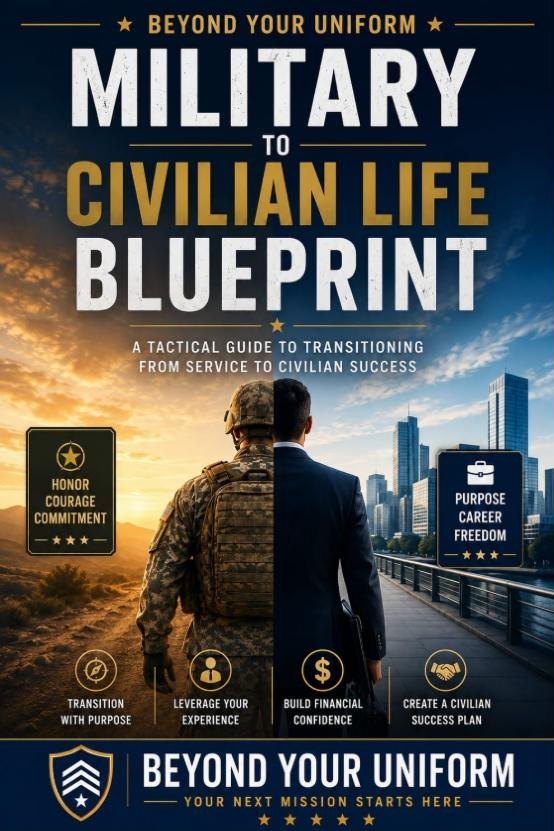
Cover of Beyond Your Uniform: Military to Civilian Life Blueprint by H.C. Morgan

Book one

Beyond Your Uniform

Military to Civilian Life Blueprint

$9.99 Kindle eBook103 pages

A practical guide for service members and veterans preparing for civilian life and work. It breaks the transition into manageable steps, so you can recognize the value of your experience, describe it in terms employers understand, and move forward with a clear plan.

  • Civilian transition
  • Rebuilding identity
  • Financial planning
  • Career translation
  • Networking
  • Interview prep
  • Emotional resilience
  • Next steps
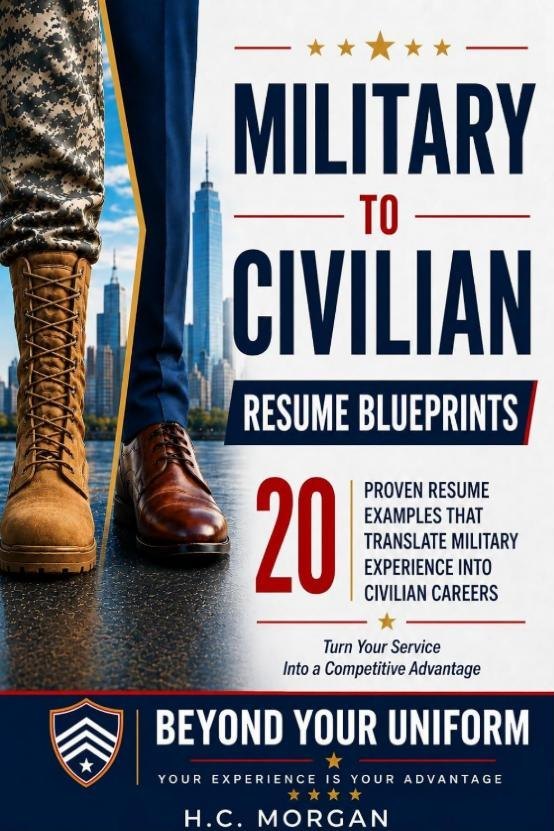
Cover of Military to Civilian Resume Blueprints by H.C. Morgan

Book two

Military to Civilian Resume Blueprints

$9.99 Kindle eBookFree with Kindle Unlimited

Twenty military and federal career paths, each translated into a civilian career. Every chapter covers transferable skills, industries that hire, recommended certifications and a résumé example you can customize. Part II adds a military acronym translation guide, a résumé customization checklist and a 30-day job search action plan.

See all 20 career paths
Intelligence Analyst → Business Intelligence Analyst Logistics Specialist → Supply Chain Manager HR Specialist → HR Manager Communications Specialist → Communications Manager Cybersecurity Specialist → Security Analyst Financial Manager → Finance Director Administrative Specialist → Executive Assistant Aircraft Maintenance Technician → Maintenance Supervisor Training Instructor → Corporate Trainer Security Forces → Security Manager Contract Specialist → Procurement Manager IT Specialist → Systems Administrator Medical Technician → Healthcare Administrator Acquisition Officer → Business Development Manager Civil Engineer → Construction Project Manager Public Affairs Officer → Marketing Manager Operations Officer → Operations Director Transportation Coordinator → Fleet Manager Executive Officer → Chief of Staff Program Manager → Operations Manager
Who it's for

Written for the whole transition

Service members

Approaching separation or retirement and want a plan before the last day in uniform.

Veterans

Exploring a new career, or already applying and not getting the callbacks your experience deserves.

Military families

Spouses and kids face new schools, jobs and healthcare too. The books help the whole household understand what's ahead.

Plan ahead

Your transition timeline

A general guide to what to work on and when. Your branch, your Transition Assistance Program (TAP) counselor and your unit will have the requirements that apply to you.

  1. 12+ months out
    • Start TAP. Retirees can begin up to two years out.
    • Decide what you want next: career, school or both.
    • Request copies of your training and evaluation records.
  2. 6 months out
    • Draft your civilian résumé.
    • Build a civilian budget for the new pay and benefits picture.
    • Update LinkedIn and reach out to veterans in your target field.
  3. 90 days out
    • Apply for jobs and practice interviews.
    • Line up health coverage for you and your family.
    • Plan your move and final appointments.
  4. After you separate
    • Keep copies of your DD-214 somewhere safe.
    • Look into VA benefits and education options.
    • Give yourself time to build a new routine.

Transition help center

Free help for every step

Practical advice for your résumé, interviews, networking, training, family and well-being. It's general guidance, so check the details with your TAP counselor or the program you're applying to.

Hands typing on a laptop at a wooden desk

Résumé

Build a civilian résumé that gets read

Hiring managers often spend less than a minute on a first look. Put your strongest, clearest information at the top and write it in their language.

The layout that works

  1. Header. Name, city and state, phone, email and LinkedIn link.
  2. Summary. Three lines: the job you want, your years of experience and your top skills. Add your clearance if you have one.
  3. Skills. 8–12 keywords taken from the job posting, where they're true for you.
  4. Experience. Most recent first. Use a civilian job title that matches what you did.
  5. Education and certifications. Degrees, licenses and certifications civilians recognize.

Before and after

Before

Served as NCOIC of supply section responsible for property accountability.

After

Supervised a 6-person supply team and kept 100% accountability of $4.2M in equipment through 3 inspections.

Before

Conducted PMCS on unit vehicles.

After

Led preventive maintenance on a 30-vehicle fleet and raised readiness from 82% to 96%.

Examples only. Use your own real numbers.

Do

  • Keep it to 1–2 pages for most private-sector jobs.
  • Tailor it for each job you apply to.
  • Save as a PDF unless the posting asks for Word.
  • Use a simple layout so hiring software can read it.
  • List an active clearance with its level, like "Active Secret clearance."

Leave off

  • Your Social Security number or a photo.
  • Acronyms a civilian won't know.
  • Tables, text boxes and graphics.
  • Classified or sensitive details.
  • Awards with no explanation of what you did to earn them.

Translate the jargon

MilitaryCivilian
NCOIC / OICSupervisor / manager
PCSRelocation
OPORDProject or operations plan
Mission-capable rateEquipment uptime
Collateral dutyAdditional responsibility
TDYBusiness travel
Counseling statementsPerformance reviews
BilletPosition

Applying for a federal job on USAJOBS? Federal résumés have their own rules. Follow the "How to apply" section of each job announcement.

Two people shaking hands across a desk at a job interview

Interviews

Tell your story with the STAR method

Most interviewers ask about times you handled a challenge. Answer in four parts so your example is clear and ends with a result.

S
Situation. Where were you and what was going on?
T
Task. What were you responsible for?
A
Action. What did you do? Say "I," not "we."
R
Result. What changed? Use a number if you can.

Prepare for these questions

  • "Tell me about yourself." Practice a 2-minute answer: where you served, what you're good at, and why this job.
  • "Why are you leaving the military?" Keep it positive and about what you're moving toward.
  • "Tell me about a time you disagreed with a supervisor."
  • "What are your salary expectations?" Research the pay range for the job and city first.

On the day

  • Research the company and know what the job does day to day.
  • Bring 2–3 questions to ask them.
  • Send a short thank-you email the same day.
Professionals talking at a networking event

Networking & LinkedIn

Most jobs come through people

A referral from someone inside a company can move your résumé to the top of the pile. Start building connections long before your last day.

  • Set up LinkedIn. Use a headline with the job you want, like "Logistics Manager | Supply Chain | Active Secret Clearance," not your rank.
  • Get a free year of Premium. LinkedIn offers veterans and military spouses a free year of Premium. See LinkedIn's veteran programs.
  • Find veterans at companies you like. Search the company on LinkedIn and filter for people who served. Most are glad to help.
  • Ask for 15 minutes, not a job. Ask what their work is like and what they'd do in your shoes.
  • Go to hiring events. Veteran career fairs put you face to face with employers who want to hire you.

Message you can send

"Hi Jordan, I'm separating from the Air Force in March after 8 years in logistics and I'm interested in supply chain roles at your company. I saw you served too. Would you have 15 minutes in the next few weeks to tell me about your transition? Thank you for your time."

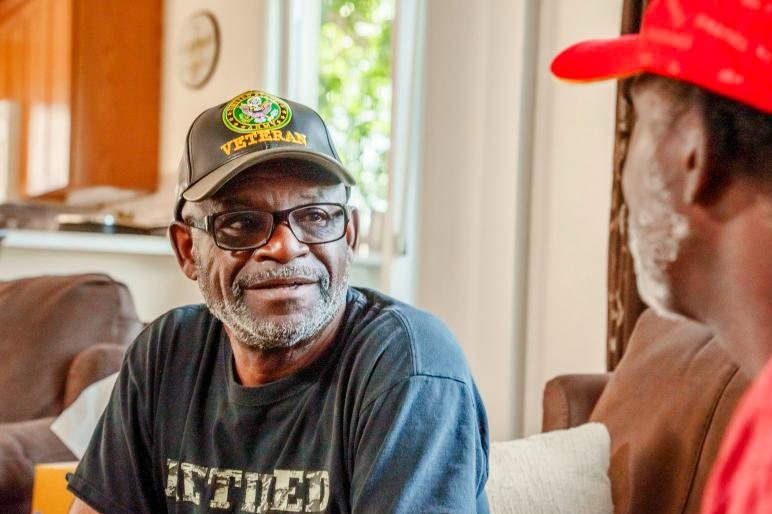
A smiling Army veteran in a veteran cap talking with a friend

Training & school

Build skills before and after you separate

  • SkillBridge. Train or intern with a civilian employer during your last months of service, often up to 180 days, with your command's approval. Ask early, because approvals take time.
  • Credentialing programs (COOL). Each branch has a COOL (Credentialing Opportunities On-Line) program that shows which civilian certifications match your military job and may help pay for them.
  • GI Bill. Use the VA's GI Bill Comparison Tool to see what each school costs and what your benefit covers.
  • Certifications employers ask for. Look at 10 job postings for the role you want and note which certifications keep showing up.
A mother in uniform hugging her young daughter

Family

The whole family transitions together

  • Talk early and often. Share the timeline, the plan and what will change for each person.
  • Plan health coverage. Know when your current coverage ends and what replaces it before your last day.
  • Collect records. Get school, medical and dental records for everyone before you move.
  • Use Military OneSource. Free counseling, financial coaching and family support stay available for a year after separation.
  • Spouse careers. The Spouse Education and Career Opportunities program (SECO) offers free career coaching for military spouses.
A hiker walking along a rocky ridge at sunrise

Well-being

Take care of yourself along the way

Leaving the service can mean losing a routine, a mission and a community all at once. It's normal for that to feel hard, even when the move is the right one.

  • Keep a daily routine: wake-up time, exercise and a plan for the day.
  • Stay in touch with people you served with.
  • Find a new team: a veterans group, a gym, a volunteer project.
  • Apply for VA health care so it's in place when you need it.

If you're in crisis or worried about someone, the Veterans Crisis Line is free, confidential and open 24/7. You don't need to be enrolled in VA benefits to call.

Call 988, then press 1Text 838255Chat VeteransCrisisLine.net

FAQ

Common questions

How long should my résumé be?

One to two pages for most private-sector jobs. Federal résumés on USAJOBS follow their own rules, so check each job announcement.

Should I put my rank on my résumé?

Use a civilian job title that describes what you did, like "Operations Manager." You can mention your rank in parentheses or in your summary, but the civilian title is what a hiring manager will recognize.

Should I list my deployments?

List what you accomplished during them rather than the deployment itself. For example, "Managed logistics for 400 personnel at a remote site" says more than a location and dates.

When should I start applying for jobs?

Many employers hire within a few months of a start date, so most applications happen in your last 3–6 months. Networking, your résumé and your LinkedIn profile should start much earlier.

How do I explain a gap after I separate?

Briefly and honestly. Time spent relocating, in school, earning a certification or caring for family is easy to explain. Focus the conversation on what you're ready to do next.

Which book should I start with?

Start with Beyond Your Uniform: Military to Civilian Life Blueprint for the full transition. If you're ready to write your résumé now, start with Military to Civilian Resume Blueprints.

Portrait of author H.C. Morgan

About the author

H.C. Morgan

"The problem was rarely a lack of qualifications. It was the gap between military language and the words a hiring manager recognizes."

H.C. Morgan brings more than 25 years of experience in federal and military organizations, with a background in program management, strategic planning and operational leadership. Over those years she watched talented service members leave with leadership experience and technical skill, then struggle to explain it to civilian employers.

She wrote the Beyond Your Uniform series to help close that gap, so service members can see how much of their experience carries forward.